


Table of Contents
Trying to get out of debt can feel like a real slog sometimes. You’ve got bills piling up, and figuring out the best way to tackle them feels like a puzzle. Two popular ways people try to get a handle on their debt are the snowball method and the avalanche method. But which one is actually right for you? It really depends on what makes you tick and what your specific money situation looks like. Let’s break down how to choose between snowball and avalanche method.
Key Takeaways
- The avalanche method attacks high-interest debts first, saving you more money on interest overall and potentially getting you debt-free faster.
- The snowball method focuses on paying off your smallest debts first, which gives you quick wins and can really boost your motivation.
- While avalanche saves more money, snowball can be better if you need to see progress quickly to stay on track.
- Both methods involve paying minimums on all debts and putting any extra cash towards one specific debt at a time.
- Your personal financial situation, like how much debt you have and the interest rates, along with what keeps you motivated, should guide your choice between snowball and avalanche.
Understanding The Core Differences
Alright, let’s break down the two main ways people tackle their debt: the snowball and the avalanche methods. They both aim to get you out of debt, but they go about it in pretty different ways. It’s not just about paying bills; it’s about how you approach the whole process.
How The Debt Snowball Method Works
The snowball method is all about building momentum. You list all your debts from the smallest balance to the largest. Then, you make minimum payments on everything except the smallest debt. That smallest one gets all your extra cash. Once it’s gone, you take all the money you were paying on it and add it to the minimum payment of the next smallest debt. It’s like a snowball rolling downhill, getting bigger as it goes. This strategy is fantastic for getting quick wins and keeping your spirits up. It helps you see progress fast, which can be a huge motivator when you’re feeling overwhelmed.
How The Debt Avalanche Method Works
Now, the avalanche method is more about the numbers. Here, you list your debts from the highest interest rate to the lowest. You make minimum payments on all debts, but all your extra money goes towards the debt with the highest interest rate. Once that one is paid off, you move to the debt with the next highest interest rate. This way, you end up paying less interest over the life of your debt. It’s a mathematically sound approach that can save you a good chunk of change in the long run.
Key Distinctions Between Snowball And Avalanche
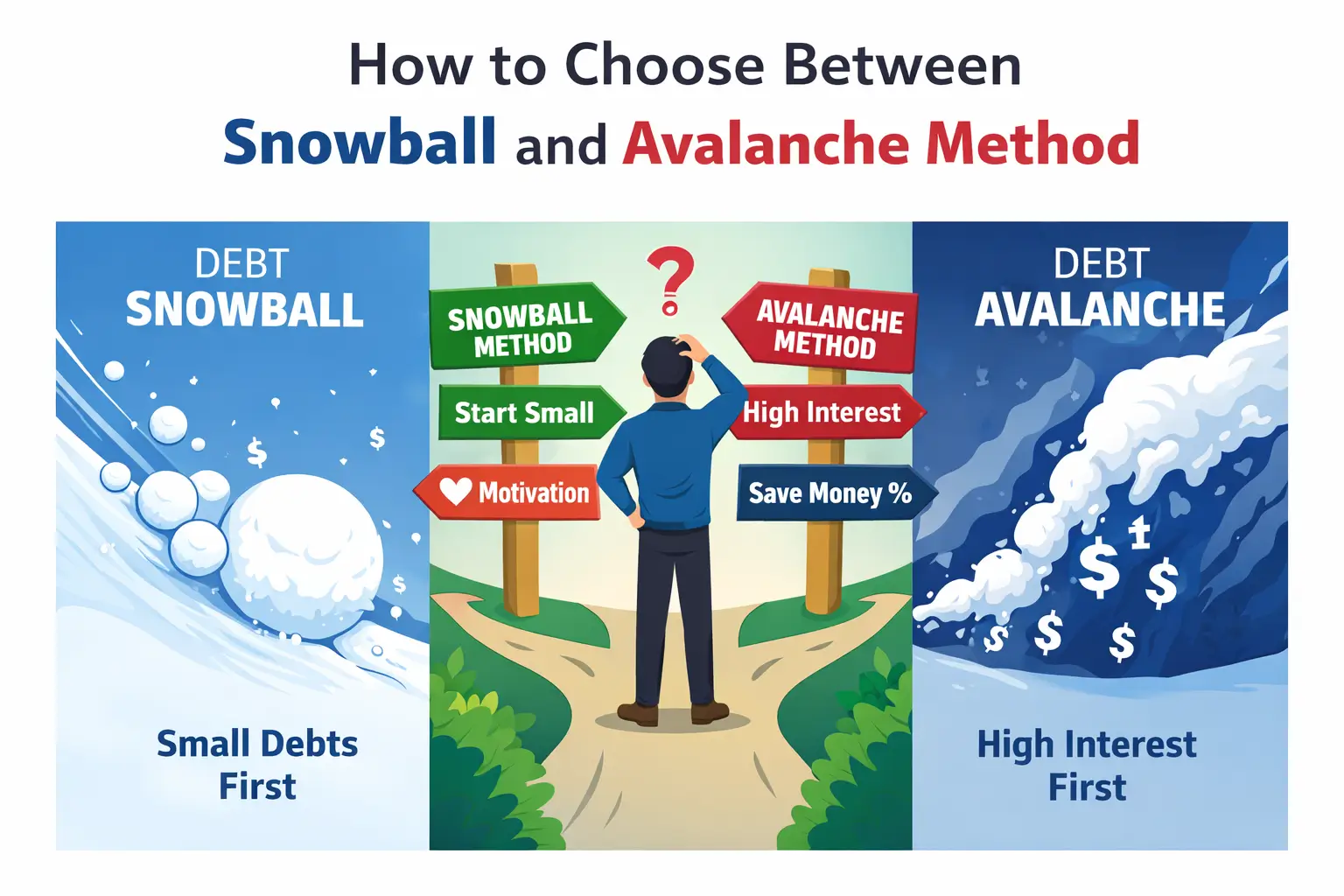
The main difference really comes down to what you prioritize: psychological wins or financial savings. The snowball method gives you those early victories by clearing out small debts quickly. The avalanche method, on the other hand, focuses on saving you money by attacking the most expensive debt first. Neither is inherently ‘better’; it just depends on what works for you and your situation. Here’s a quick look:
- Snowball: Focuses on smallest balance first.
- Avalanche: Focuses on highest interest rate first.
- Snowball: Builds psychological momentum.
- Avalanche: Minimizes total interest paid.
Choosing between these two methods often comes down to your personality. If seeing progress quickly keeps you going, snowball might be your jam. If saving every possible dollar is your main goal, avalanche is likely the way to go. It’s about finding a plan you can actually stick with.
Here’s a simple table to visualize the order of attack:
| Method | Order of Attack |
|---|---|
| Snowball | Smallest Balance First |
| Avalanche | Highest Interest First |
Ultimately, the best method is the one that helps you stay committed to becoming debt-free. You can even use a debt payoff calculator to see how each might play out for your specific debts.
Choosing The Snowball Method For Motivation

Sometimes, the biggest hurdle to tackling debt isn’t the amount you owe, but just getting started and staying motivated. If that sounds like you, the debt snowball method might be your best bet. It’s all about building momentum through quick wins.
When Quick Wins Drive Your Progress
The snowball method is designed to give you that psychological boost. You focus on paying off your smallest debt first, regardless of its interest rate. Once that one is gone, you roll the money you were paying on it into the next smallest debt. This creates a feeling of accomplishment early on, which can be incredibly powerful when you’re feeling overwhelmed.
- You get to celebrate paying off entire debts more frequently.
- This method simplifies your focus – you always know which debt to attack next.
- It’s great for people who need to see tangible progress to keep going.
Leveraging Small Debts For Momentum
Think of it like a snowball rolling down a hill. It starts small, but as it picks up more snow, it gets bigger and faster. In this case, the ‘snow’ is the money you’re paying towards your debts. By eliminating those smaller balances quickly, you free up cash flow that you can then add to your payments on larger debts. This creates a powerful cycle of progress.
Ideal For Those Who Struggle With Long-Term Plans
Let’s be honest, paying off debt can feel like a marathon. If you’ve tried sticking to a budget or a repayment plan before and found yourself losing steam, the snowball method offers a different approach. The frequent ‘wins’ from knocking out smaller debts can help you stay engaged and committed over the long haul. It’s less about optimizing for interest savings and more about keeping your spirits high.
Compare Snowball vs Avalanche using this Debt Payoff Strategy Calculator
Opting For The Avalanche Method For Savings
Prioritizing High-Interest Debts
The avalanche method is all about being smart with your money, especially when it comes to interest. You know how some debts just seem to grow and grow, no matter how much you pay? That’s usually because of a high interest rate. The avalanche approach says, “Let’s tackle that beast first.” You make the minimum payments on all your other debts, but any extra cash you have goes straight to the debt with the highest interest rate. It’s like attacking the most expensive part of your debt problem head-on.
Maximizing Interest Savings Over Time
This is where the avalanche method really shines. By focusing on those high-interest debts, you’re actively reducing the amount of money you’ll pay in interest over the life of your loans. Think of it this way: if you have a credit card with a 20% APR and a student loan with a 5% APR, paying off the credit card first saves you a lot more money in the long run than paying off the student loan first. It might not feel as exciting as paying off a small debt quickly, but the financial payoff is significant.
Here’s a quick look at how it can play out:
| Debt Type | Balance | Interest Rate | Minimum Payment |
|---|---|---|---|
| Credit Card | $5,000 | 19.99% | $100 |
| Personal Loan | $10,000 | 8.00% | $200 |
| Student Loan | $20,000 | 4.50% | $250 |
If you had an extra $300 to put towards debt each month, applying it to the credit card first (avalanche) would save you hundreds, potentially thousands, in interest compared to paying off the student loan first.
Best For Financially Savvy Individuals
This method is a great fit if you’re someone who likes to see the numbers add up and are motivated by saving money. It requires a bit more discipline because you might not see a debt disappear for a while, especially if your highest-interest debt is also a large one. But if you can stick with it, the avalanche method is a powerful tool for becoming debt-free faster and cheaper. It’s for the person who understands that paying less interest means more of their money goes towards actually paying down the principal, which is the real goal.
The avalanche method is a logical, numbers-driven approach to debt repayment. It prioritizes financial efficiency, aiming to minimize the total cost of debt by attacking the most expensive debts first. While it might require more patience, the long-term savings in interest can be substantial, making it an attractive option for those focused on maximizing their financial gains.
Evaluating Your Personal Financial Situation
Okay, so you’ve heard about the snowball and avalanche methods, and you’re wondering which one is actually going to work for you. It’s not a one-size-fits-all deal, right? You’ve got to look at your own money situation and figure out what makes the most sense. It’s like picking the right tool for a job – you wouldn’t use a hammer to screw in a bolt, would you?
Assessing Your Debt Balances and Interest Rates
This is where you really get down to the nitty-gritty. Grab a piece of paper, or open up a spreadsheet, and list out all your debts. We’re talking credit cards, personal loans, car loans, student loans – everything. For each one, jot down the total amount you owe and, super importantly, the interest rate (that’s the APR, or Annual Percentage Rate). This info is usually on your monthly statement. Knowing these numbers is key because it directly impacts which method might save you more money over time.
Here’s a quick look at what you might find:
| Debt Type | Balance | Interest Rate | Minimum Payment |
|---|---|---|---|
| Credit Card A | $1,500 | 22% | $50 |
| Personal Loan | $5,000 | 10% | $150 |
| Credit Card B | $3,000 | 18% | $75 |
| Car Loan | $10,000 | 5% | $250 |
If you have a lot of small debts with high interest rates, the avalanche method might seem appealing because you’ll save a ton on interest. But if you have one giant debt with a super high rate, that might be the one to tackle first with avalanche.
Understanding Your Income and Spending Habits
Next up, let’s talk about your cash flow. How much money is actually coming in each month, and where is it all going? You need to be honest here. If you’re barely scraping by and can only afford minimum payments, that’s one thing. If you have some wiggle room, you can decide how much extra you can realistically put towards debt each month. This extra amount is what you’ll use to attack your debts faster.
Think about it this way:
- Track your spending: For a month, write down every single dollar you spend. Seriously, even that coffee you grab on the way to work. This shows you where your money is actually going.
- Create a realistic budget: Based on your income and spending, figure out how much you can actually afford to put towards debt each month, on top of the minimums.
- Identify areas to cut back: Are there subscriptions you don’t use? Eating out too much? Finding even small amounts to redirect to debt can make a big difference.
If your budget is really tight, the quick wins from the snowball method might be what you need to stay motivated. If you’re disciplined and can stick to a strict budget, the avalanche method’s long-term savings might be more attractive.
Considering Your Tolerance For Risk And Timeframes
How do you handle waiting for results? Are you someone who needs to see progress right away to keep going, or can you play the long game? This is where your personality really comes into play.
If you’re impatient and get discouraged easily, the snowball method’s quick wins might be your best bet. You’ll knock out a few small debts early on, which can feel really good and give you the boost you need. If you’re more analytical and can stay focused on the bigger picture, even without immediate wins, then the avalanche method might be a better fit. You’ll be saving more money on interest in the long run, which is a pretty great reward, even if it takes a bit longer to get there.
The Psychological Impact Of Each Method

When you’re deep in debt, it’s not just about the numbers; it’s a mental game too. How you approach paying it off can really mess with your head, for better or worse. Understanding this is key to actually sticking with a plan.
The Power Of Early Success With Snowball
The snowball method is all about those quick wins. You tackle your smallest debts first, and bam! You’ve paid one off. This feeling of accomplishment is huge. It’s like getting a little dopamine hit that tells your brain, “Hey, we’re actually doing this!” This can be a real game-changer, especially if you’ve tried to get out of debt before and felt like you were just spinning your wheels. Seeing those debts disappear, even the small ones, builds momentum. It makes the whole process feel less like a marathon and more like a series of achievable sprints.
- Celebrate each debt paid off. This is your fuel.
- Visualize the growing payment. As one debt goes, its payment gets added to the next.
- Focus on the progress, not just the total amount.
Maintaining Focus Without Immediate Gratification
The avalanche method, on the other hand, asks for a different kind of mental fortitude. You’re focusing on the highest interest rates, which often means tackling larger balances first. This can take a while. You might be making extra payments for months, even years, without seeing a single debt completely vanish.
It requires a lot of discipline and trust in the process. You have to believe that the long-term savings are worth the slower visible progress. It’s about delayed gratification – knowing that by being strategic now, you’ll save more money and potentially be debt-free sooner, even if it doesn’t feel like it day-to-day.
Emotional Considerations In Debt Repayment
Ultimately, the best method is the one you’ll actually stick with. If the thought of paying off a tiny debt and feeling that rush of success keeps you going, the snowball might be your best bet. It’s about making the journey feel rewarding. But if you’re highly motivated by saving money and can handle the slower pace, the avalanche method’s mathematical efficiency might be more satisfying. Think about what kind of feedback loop works best for you. Do you need those frequent pats on the back, or can you stay motivated by a larger, long-term financial goal?
Your emotional state is a powerful tool in debt repayment. Ignoring it can lead to burnout and abandoning your plan, no matter how mathematically sound it is. Choose the path that aligns with your psychological needs to ensure you see the journey through to the end.
Potential Drawbacks To Consider
While both the debt snowball and debt avalanche methods are solid plans for tackling debt, they aren’t perfect for everyone. Each has its own set of downsides that could trip you up if you’re not prepared.
Snowball’s Costly Interest Implications
The biggest issue with the snowball method is that it often means paying more in interest over the long run. By focusing on the smallest balances first, you’re letting those higher-interest debts continue to rack up charges. This can significantly extend the time it takes to become debt-free and cost you a good chunk of change. Ignoring interest rates can lead to paying thousands more than necessary.
- Higher total interest paid: You’ll likely pay more interest overall compared to the avalanche method.
- Longer repayment period: It can take longer to become completely debt-free.
- Accumulating interest: While you’re paying off small debts, interest continues to grow on larger ones.
It’s easy to get caught up in the quick wins of the snowball method, but it’s important to remember that those small victories come at a price. That price is often paid in the form of extra interest charges, which can add up surprisingly fast.
Avalanche’s Demand For Discipline
The avalanche method, while financially smarter, requires a different kind of strength: discipline. Because you’re not seeing those quick wins from paying off small debts, it can feel like you’re not making much progress. This can be tough, especially if you’re someone who needs immediate positive feedback to stay motivated. You have to be okay with chipping away at a large, high-interest debt for a while before you see a debt disappear completely. This is where understanding your financial situation becomes really important.
- Requires strong willpower: You need to stay focused even without immediate gratification.
- Potential for burnout: The long haul on large debts can be discouraging.
- Less frequent ‘wins’: You won’t be paying off entire debts as often as with the snowball.
When A Method Might Not Be Optimal
Sometimes, neither method is the perfect fit. If you have a mix of high-interest and low-interest debts, but your smallest debts also happen to have the highest interest rates, the avalanche method might still be the best choice. Conversely, if all your debts have very similar interest rates, the snowball method might be more motivating without a huge financial penalty. It really comes down to your personal financial landscape and what keeps you going. If your debt feels overwhelming, you might need to look into other options like debt relief programs, but be sure to research them carefully.
So, Which Method is Your Debt-Busting Buddy?
Alright, so we’ve talked about the snowball and avalanche methods for tackling debt. The snowball gives you those quick wins, which can be super motivating when you’re feeling buried. But, it might cost you a bit more in interest over time. The avalanche, on the other hand, is the money-saver, chipping away at those high-interest debts first.
It’s mathematically the smartest, but you might not see a debt disappear for a while, which can be tough. Honestly, the best method is the one you’ll actually stick with. If seeing a debt gone makes you feel like a superhero, go snowball. If saving every penny is your jam, then avalanche it is. Don’t overthink it too much; just pick one and get started. The most important thing is making progress, no matter how small it seems at first.
Frequently Asked Questions
What’s the main difference between the snowball and avalanche methods?
Think of it like this: the snowball method is like rolling a small snowball down a hill – it starts small but gets bigger as you add more. You pay off your smallest debts first to get quick wins and feel good about your progress. The avalanche method is more like aiming for the biggest prize first. You pay off the debts with the highest interest rates first, which saves you more money on interest over time, even if it takes longer to see a debt disappear completely.
When should I use the snowball method?
The snowball method is awesome if you need to see progress fast to stay motivated. If you’ve tried to pay off debt before and got discouraged, or if you just love checking things off a list, this method is for you. It’s great for getting those early wins that keep you going, especially if your debts aren’t too different in size or interest rate.
When is the avalanche method a better choice?
If saving money is your top priority, the avalanche method is usually the way to go. It’s super smart because it targets those high-interest debts that are costing you the most. This means you’ll pay less money overall and often become debt-free a bit faster in the long run. It’s perfect if you’re good at staying focused and don’t need those quick wins to keep you motivated.
Can I combine both methods?
Absolutely! Some people find that a mix works best. You might start with the snowball method to get a couple of small debts paid off and build momentum, then switch to the avalanche method to tackle your highest-interest debts. The most important thing is to pick a plan that you’ll actually stick with.
Does the snowball method cost more money?
Yes, generally it does. Because you’re not focusing on the highest interest rates first, you might end up paying more in interest over the life of your debts compared to the avalanche method. However, for some people, the motivation boost from paying off small debts quickly is worth the extra interest cost.
Which method will get me out of debt faster?
In most cases, the avalanche method will get you out of debt faster because you’re attacking the most expensive debts first, which saves you money on interest and reduces your total balance more quickly. However, if the snowball method keeps you so motivated that you pay more than you otherwise would, it could potentially lead to faster debt freedom for you.


