
Quick Answer
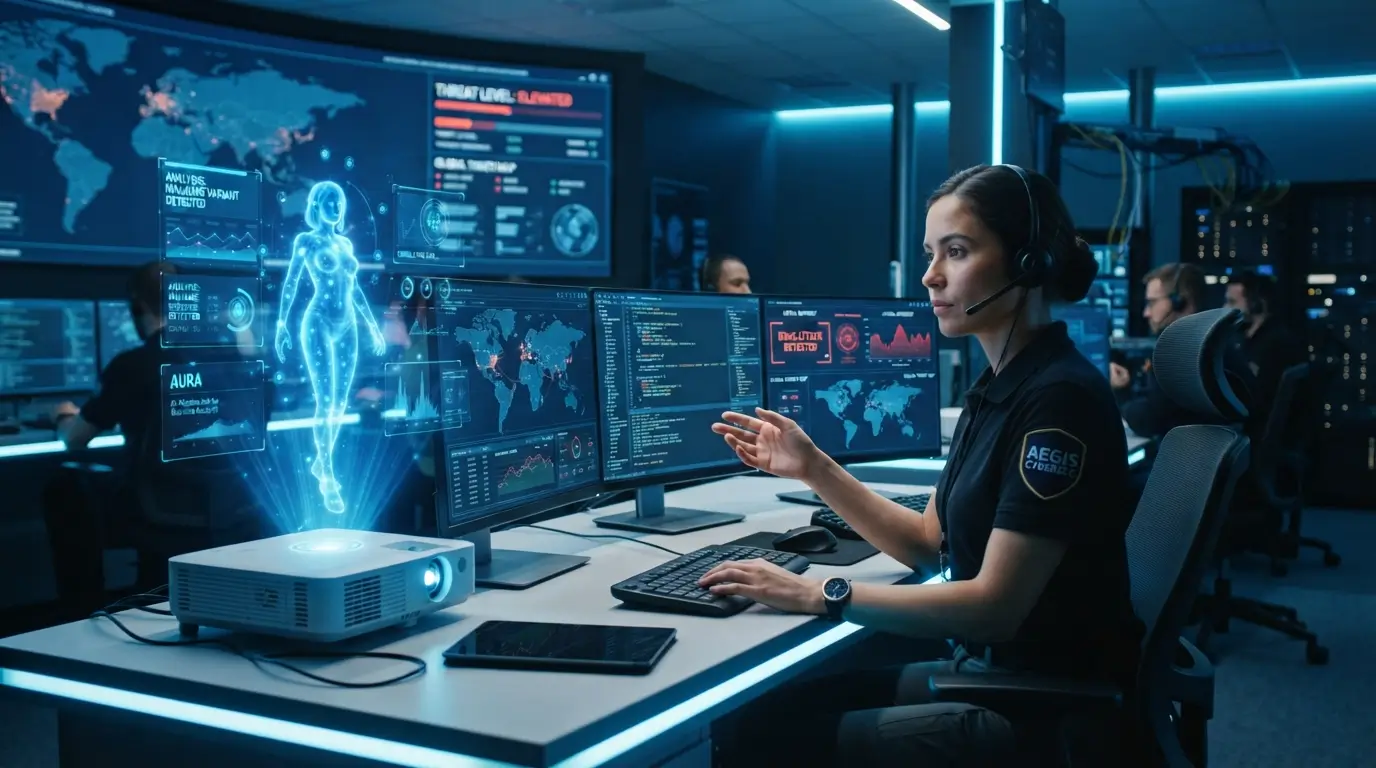
will cybersecurity be replaced by ai? No, AI will not fully replace cybersecurity. AI is transforming how security teams detect threats, automate repetitive tasks, and respond to incidents, but it cannot replace human judgment, ethical decision-making, creative attacker thinking, or accountability. Cybersecurity jobs will change significantly, with many routine tasks automated, but the field will still need skilled humans working alongside AI for the foreseeable future.
Table of Contents
Introduction
If you’ve spent any time reading tech news lately, you’ve probably seen headlines warning that AI is coming for every job, including cybersecurity. It’s a fair question to ask. AI tools can now scan millions of log entries in seconds, spot suspicious patterns faster than any human analyst, and even write basic code to patch vulnerabilities.
So does that mean the cybersecurity profession is on its way out? Not exactly.
The truth is more nuanced than a simple yes or no. AI is a powerful tool, but cybersecurity isn’t just about spotting patterns in data. It’s about understanding intent, navigating ambiguity, making judgment calls under pressure, and outsmarting human attackers who are constantly changing their tactics.
This article breaks down exactly what AI can and can’t do in cybersecurity today, which jobs are changing, which are safe, and what skills you’ll need to stay relevant in the years ahead. Let’s start by getting clear on what “AI in cybersecurity” actually means.
Read More: How Hard Is Cybersecurity?
What Is AI in Cybersecurity?
AI in cybersecurity refers to the use of machine learning, natural language processing, and automation tools to detect threats, analyze data, and respond to security incidents faster than traditional manual methods allow.
In practice, this looks like:
- Machine learning models that learn what “normal” network behavior looks like, so they can flag anomalies
- Natural language processing (NLP) that scans phishing emails or dark web chatter for threat indicators
- Automated response systems that can isolate an infected device the moment malware is detected
- AI-powered chatbots that help security teams triage alerts faster
Think of AI in cybersecurity like a very fast, very tireless assistant. It doesn’t get bored scanning the same logs for the 500th time, and it doesn’t need coffee breaks. But like any assistant, it works best when a skilled human is guiding it, checking its work, and making the final call.
This distinction matters a lot, and it’s the key to understanding why AI is reshaping the industry rather than eliminating it. Now let’s look at why so many people assume AI will take over entirely.
Why People Think AI Will Replace Cybersecurity

The idea that AI will replace cybersecurity jobs isn’t coming out of nowhere. There are real reasons this fear has taken hold.
1. AI is genuinely good at pattern recognition. Security work often involves sifting through massive volumes of data looking for anomalies. AI does this faster and more consistently than humans.
2. Automation is already replacing some manual tasks. Tasks like log analysis, malware signature matching, and basic alert triage are increasingly automated.
3. Big tech companies keep promoting “autonomous security.” Marketing language from vendors often implies their AI tools can run security operations with minimal human involvement, which fuels the perception that humans are becoming optional.
4. AI has replaced jobs in other industries. People have seen AI automate tasks in customer service, translation, and content writing, so it’s natural to assume cybersecurity will follow the same path.
5. High-profile AI demos look impressive. When you watch an AI tool detect and contain a simulated attack in seconds, it’s easy to think, “why would you need a human for this?”
These are legitimate observations, but they only tell part of the story. AI’s strength in narrow, well-defined tasks doesn’t automatically translate into the broader, messier reality of defending real organizations against real, creative human adversaries. To understand why, it helps to look closely at what AI is actually capable of right now.
Read More: Top 15 Cybersecurity Companies
What AI Can Already Do
AI has made real, measurable progress in cybersecurity. Here’s what it’s genuinely good at today.
Threat Detection and Anomaly Spotting
AI models can process enormous volumes of network traffic and flag unusual behavior, such as a login from an unfamiliar location at 3 a.m. or a sudden spike in data transfer. This kind of pattern recognition is one of AI’s biggest strengths.
Automating Repetitive Tasks
Security analysts spend a lot of time on repetitive work: sorting alerts, checking IP reputations, and writing incident reports. AI can handle much of this, freeing humans to focus on complex decisions.
Phishing and Malware Detection
AI models trained on millions of phishing emails and malware samples can identify new variants that follow similar patterns, even if the exact code or wording hasn’t been seen before.
Vulnerability Scanning
AI-enhanced scanners can prioritize which vulnerabilities in a system pose the greatest real-world risk, rather than just listing every flaw with no context.
Speeding Up Incident Response
When a breach happens, speed matters. AI can automatically isolate compromised systems, block malicious IP addresses, and alert teams within seconds of detecting suspicious activity.
Here’s a simple table summarizing these capabilities:
| AI Capability | What It Does | Example |
|---|---|---|
| Anomaly detection | Flags unusual network behavior | Spotting a login from a new country at odd hours |
| Alert triage | Sorts and prioritizes security alerts | Filtering out false positives automatically |
| Phishing detection | Identifies suspicious emails | Catching a fake invoice email before it’s opened |
| Malware analysis | Detects known and unknown malware patterns | Flagging a new ransomware variant |
| Automated response | Contains threats instantly | Isolating an infected laptop from the network |
These capabilities are impressive, and they explain why AI adoption in security operations centers has grown so quickly. But impressive automation in narrow tasks is very different from full replacement of human judgment. That difference becomes clear when you look at what AI still struggles with.
What AI Cannot Do

This is where the “AI will replace cybersecurity” argument starts to fall apart. Despite its strengths, AI has serious limitations that keep humans firmly in the loop.
It Can’t Understand Context Like Humans Do
AI can flag that an employee downloaded an unusually large file, but it doesn’t know if that employee is a legitimate data analyst doing their job or an insider stealing company secrets. Understanding intent often requires human context, like knowing someone’s role, recent conversations, or company politics.
It Struggles With Novel, Creative Attacks
Attackers are constantly inventing new techniques specifically designed to evade AI detection systems. A skilled human hacker can think several steps ahead, exploit social engineering, or combine unrelated vulnerabilities in creative ways that a model trained on past data may not recognize.
It Can Be Fooled or Manipulated
AI models themselves can be tricked. Attackers use techniques like “adversarial inputs” to subtly manipulate data so AI systems misclassify a threat as safe. This means AI security tools can become a new attack surface themselves.
It Lacks Accountability and Ethical Judgment
When a security decision affects real people, like whether to lock an employee out of their account or report a breach to regulators, someone has to be accountable. AI can’t take legal or ethical responsibility for high-stakes decisions.
It Can Produce False Positives and False Negatives
AI isn’t perfect. It can flag harmless activity as dangerous (false positive) or, worse, miss a real threat entirely (false negative). Humans are still needed to review and correct these errors.
It Doesn’t Understand Business Priorities
Every organization has unique risk tolerance, budget constraints, and compliance needs. AI doesn’t inherently understand that a hospital’s priorities around patient data differ from a retail company’s priorities around payment data. Humans provide this strategic judgment.
In short, AI is excellent at speed and scale, but weak at judgment, creativity, and accountability. That combination means AI works best as a partner to human analysts, not a replacement. With that balance in mind, let’s look at which specific jobs are most likely to change because of AI.
Jobs Most Likely to Change
Some cybersecurity roles will be significantly reshaped by AI, especially those built around repetitive, rules-based tasks.
- Tier 1 SOC Analysts: Entry-level analysts who triage basic alerts will see much of this work automated. Their role is shifting toward supervising AI systems rather than manually reviewing every alert.
- Manual Log Reviewers: Anyone whose main job is combing through logs for known patterns will find AI doing this work faster and more consistently.
- Basic Vulnerability Scanning Roles: AI tools now handle much of the initial scanning and prioritization that used to require manual effort.
- Routine Compliance Checkers: AI can automate a lot of the checklist-style compliance verification work.
This doesn’t necessarily mean fewer jobs overall. It often means these roles evolve into new responsibilities, like managing AI tools, validating their outputs, and handling the more complex cases AI escalates. Now let’s look at the roles that are much harder for AI to touch.
Jobs Least Likely to Change
Some cybersecurity roles rely heavily on skills AI simply doesn’t have: creativity, ethics, strategic thinking, and human relationships.
- Penetration Testers (Ethical Hackers): Finding creative, novel ways to break into systems requires human ingenuity that mimics real attacker psychology.
- Security Architects: Designing secure systems from the ground up requires understanding business goals, budget trade-offs, and long-term strategy.
- Incident Response Leaders: During a real breach, someone needs to make high-stakes calls, communicate with executives, and coordinate legal and PR teams.
- Security Researchers: Discovering entirely new categories of vulnerabilities requires the kind of original thinking AI can’t replicate.
- Governance, Risk, and Compliance (GRC) Specialists: These roles require interpreting laws, negotiating with regulators, and understanding nuanced organizational risk.
- Social Engineering Experts: Understanding human psychology to test or defend against manipulation tactics is a deeply human skill.
These roles share a common thread: they require judgment, creativity, and human relationships that AI can support but not replace. To understand where this is all heading, it helps to hear what industry experts are actually predicting.
Expert Predictions
Cybersecurity leaders and researchers generally agree on one thing: AI is a force multiplier, not a replacement.
Many industry analysts point out that the cybersecurity talent shortage, which has left millions of positions unfilled globally, means AI is more likely to help close the gap than eliminate jobs. There simply aren’t enough skilled humans to handle the current volume of threats, so AI is stepping in to handle scale, not to make people obsolete.
Security vendors themselves largely echo this “human plus AI” framing, even while marketing “autonomous” features. Most position their AI as a way to reduce alert fatigue and let analysts focus on higher-value investigations, not as a full replacement for security teams.
There’s also a growing consensus that AI is creating new cybersecurity jobs that didn’t exist before, such as:
- AI security auditors (who test AI systems for vulnerabilities)
- Prompt injection specialists (who test AI models against manipulation attacks)
- AI governance officers (who ensure AI tools are used ethically and legally)
So while some roles shrink, new ones are emerging in their place. This pattern, automation replacing some tasks while creating new specialties, is common throughout tech history. It also tells us a lot about what skills will matter most going forward.
Skills You Need
If you want to future-proof your cybersecurity career, focus on skills that complement AI rather than compete with it.
Technical skills:
- Cloud security fundamentals (AWS, Azure, GCP)
- Understanding how machine learning models work, at least conceptually
- Scripting and automation (Python is especially valuable)
- Network security fundamentals
- Familiarity with AI-powered security tools and how to validate their outputs
Human-centered skills:
- Critical thinking and investigative reasoning
- Communication skills, especially explaining technical risk to non-technical stakeholders
- Ethical decision-making
- Creativity in problem-solving
Strategic skills:
- Risk management and business alignment
- Understanding regulatory and compliance frameworks
- Incident response leadership
A good way to think about it: AI can be your fastest research assistant, but you still need to be the analyst who asks the right questions and makes the final call. With that in mind, it’s worth addressing a question a lot of newcomers are asking right now.
Should You Still Learn Cybersecurity?
Yes, and here’s why this is still one of the smarter career paths available.
Demand still far outpaces supply. The global shortage of skilled cybersecurity professionals remains significant, and AI adoption isn’t closing that gap fast enough on its own.
AI increases the need for oversight, not less. As organizations adopt more AI security tools, they need skilled people who understand how those tools work, where they fail, and how to validate their outputs.
New specialties are opening up. Careers focused on securing AI systems themselves are a fast-growing niche within cybersecurity.
Entry-level work is changing, not disappearing. Yes, some basic tasks are being automated, but this often means newcomers get exposed to more interesting work sooner, since AI handles the repetitive grunt work.
If you’re considering this field, the smartest move is to learn cybersecurity fundamentals alongside AI literacy. Understanding how AI tools work, and where they break, will make you far more valuable than someone who ignores AI entirely or someone who relies on it blindly.
To pull all of this together, here’s a direct side-by-side comparison of where AI excels and where humans still lead.
AI vs Human Comparison Table
| Task | AI Strength | Human Strength | Best Approach |
|---|---|---|---|
| Analyzing large volumes of log data | Very strong | Slow, error-prone at scale | Let AI handle first-pass analysis |
| Detecting known malware patterns | Very strong | Moderate | AI-led with human review |
| Spotting novel, creative attacks | Weak | Very strong | Human-led |
| Making ethical/legal decisions | Cannot do | Very strong | Human-only |
| Speed of initial threat detection | Very strong | Slower | AI-led |
| Understanding business context | Weak | Very strong | Human-led |
| Social engineering and psychology | Weak | Very strong | Human-led |
| Reducing alert fatigue | Strong | Moderate | AI-assisted |
| Strategic security planning | Weak | Very strong | Human-led |
| Incident response coordination | Moderate (automation) | Very strong (leadership) | Human-led with AI support |
This table makes the pattern clear: AI dominates in speed and scale, while humans dominate in judgment and context. The most effective security teams combine both. Now let’s tackle some of the specific questions people commonly search alongside this topic.
Frequently Asked Questions
Will AI take over all cybersecurity jobs?
No. AI will automate many repetitive, rules-based tasks, but roles requiring creativity, ethical judgment, and strategic decision-making will still need skilled humans for the foreseeable future.
Is cybersecurity a dying career because of AI?
No, quite the opposite. The global cybersecurity talent shortage means demand for skilled professionals remains high. AI is helping teams manage scale, not replacing the need for human expertise.
Can AI hack systems better than humans?
AI can assist in finding certain vulnerabilities faster, but sophisticated, creative attacks still typically require human strategy, especially those involving social engineering or chaining unusual exploits together.
What cybersecurity jobs are safest from AI automation?
Roles like penetration testing, security architecture, incident response leadership, and governance/risk/compliance are among the safest, since they rely heavily on human judgment and creativity.
Should I learn AI skills alongside cybersecurity?
Yes. Understanding how AI models work, where they fail, and how to validate their outputs is quickly becoming a core cybersecurity skill, not a separate specialty.
How is AI changing entry-level cybersecurity jobs?
Entry-level roles are shifting away from manual alert triage and toward supervising, validating, and fine-tuning AI-driven security tools.
Can attackers use AI too?
Yes. Cybercriminals increasingly use AI to write more convincing phishing emails, automate attacks, and probe for vulnerabilities faster, which is part of why human defenders equipped with AI tools remain essential.
These questions capture most of what people wonder about when they first hear the “AI will replace cybersecurity” claim. Bringing it all together, here’s the bottom line.
Final Verdict
AI is not going to replace cybersecurity. It’s going to reshape it.
The tasks that involve repetitive pattern-matching, like sorting alerts, scanning for known malware, and flagging anomalies, are increasingly handled by AI, and that’s a good thing. It frees human experts to focus on the parts of the job that actually require human judgment: understanding context, thinking creatively, making ethical calls, and leading organizations through real crises.
If you’re already in cybersecurity, the smart move is to lean into AI as a tool rather than fear it as a competitor. Learn how these systems work, where they fail, and how to use them to amplify your own skills.
If you’re considering entering the field, this is still a strong, in-demand career path. Just make sure you’re building the kind of skills, judgment, creativity, and strategic thinking, that AI can’t replicate anytime soon.
The organizations that will stay safest going forward won’t be the ones that rely entirely on AI, or entirely on humans. They’ll be the ones that figure out how to combine both effectively.

