

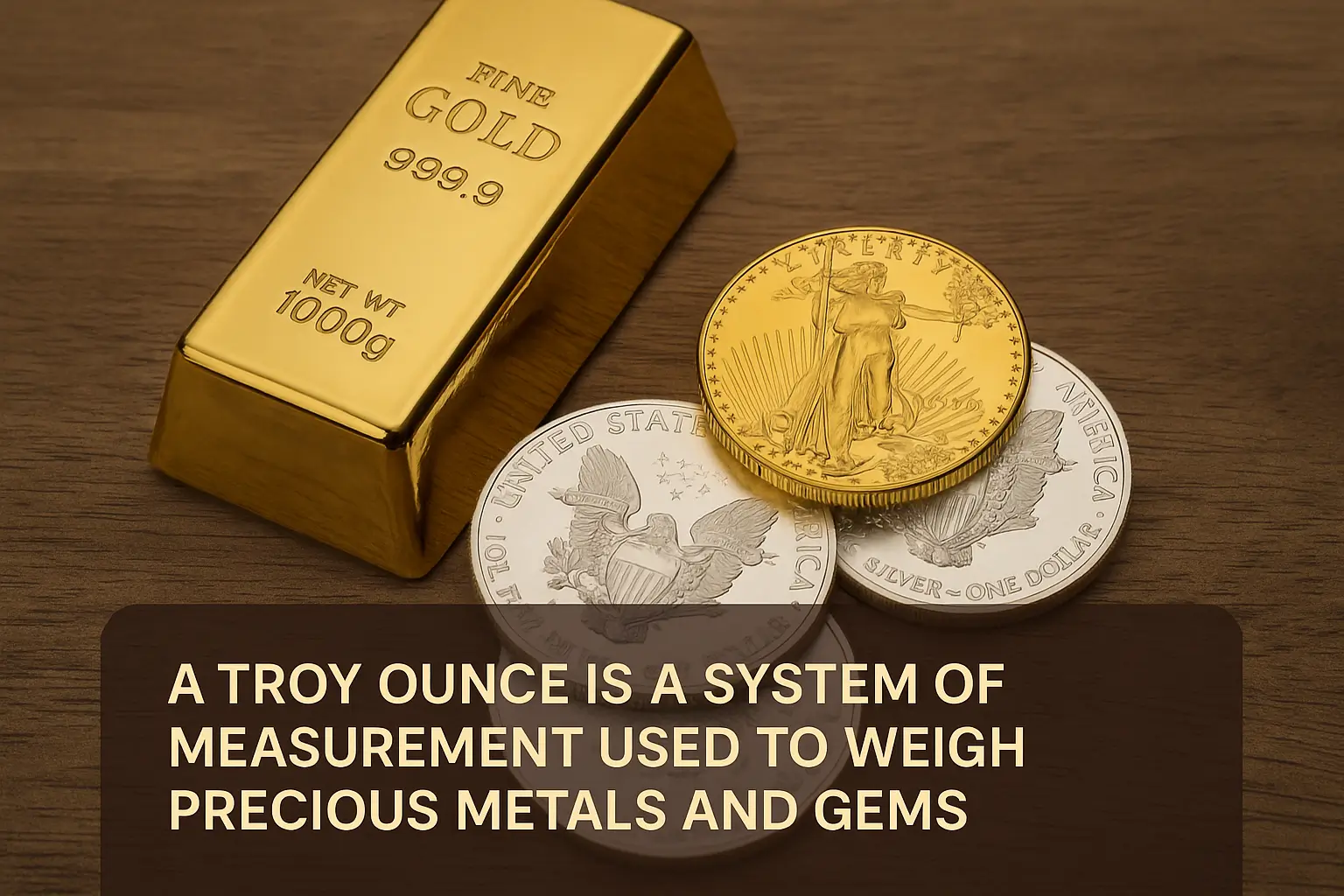
A troy ounce is a unit of measurement used for weighing precious metals and gemstones.
What Is a Troy Ounce and How Is It Different from a Regular Ounce?
A troy ounce is a unit of measurement used to weigh precious metals that originated in the Middle Ages. According to the Royal Mint of the United Kingdom, one troy ounce is equivalent to 31.1034768 grams and was first used at Troyes, France.
A standard ounce (also known as an avoirdupois ounce) is used to weigh other items such as sugar and cereals. A standard ounce is slightly smaller than a troy ounce, weighing 28.35 grams.
The troy ounce remains the standard unit of measurement in the precious metals market to meet purity requirements. Frequently, the troy ounce is shortened to “t oz” or “oz t.”
Why Is the Troy Ounce Still Used Today?
Despite the evolution of modern metric systems, the troy ounce remains the gold standard for weighing and pricing precious metals. This unit is essential for maintaining consistency in global metal markets, enabling buyers and sellers to trade across borders with clarity and trust. When you see the price of gold or silver quoted in financial news, it refers to the troy ounce.
While some gemstone transactions also once used this system, modern gem trading has largely transitioned to carats. However, the troy ounce endures due to its precision and longstanding historical use in metals investing.
A Brief History of the Troy Ounce System
The roots of the troy ounce lie in the Middle Ages (and perhaps earlier). Some historians trace its origin to Roman times, when bronze bars were divided into 12 “uncia” (ounces) of about 31.1 grams each. In medieval Europe, merchants at fairs in Troyes, France, formalized a new weight system: they set 1 troy ounce = 480 grains (of barleycorn) and 12 troy ounces = 1 troy pound.
This became the standard for trade in gold and silver. England officially adopted the troy ounce for bullion in 1527, and the United States followed suit in 1828. Over time the “troy” system proved so reliable that it endured well beyond the advent of the metric system, and it remains the global benchmark for gold, silver, platinum, and other precious metals.
Troy Ounce vs. Avoirdupois Ounce: What’s the Difference?
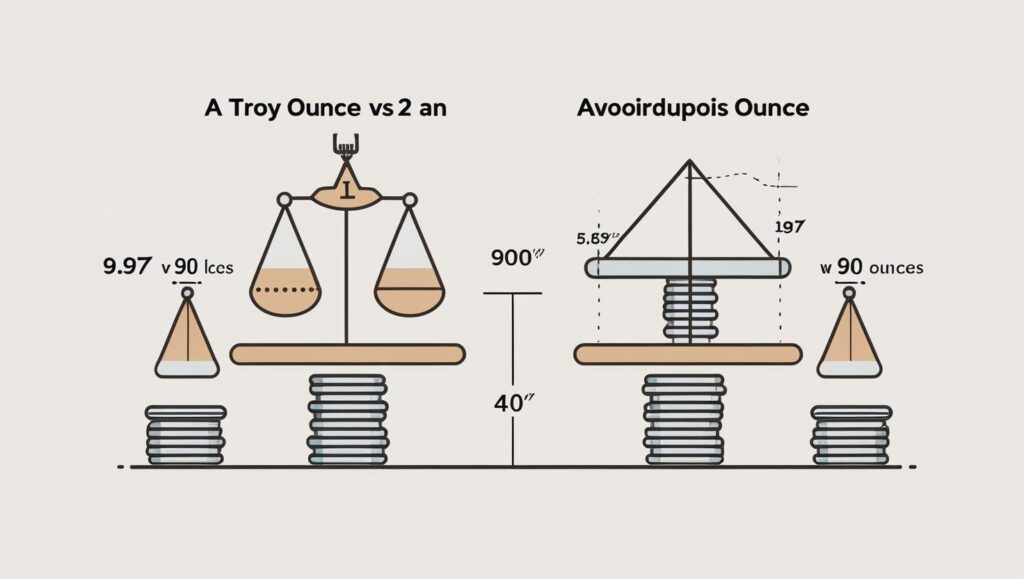
The avoirdupois ounce (standard ounce), used in the U.S. equals 28.349 grams, or 437.5 grains, for common items. In contrast, a troy ounce weighs 31.103 grams or 480 grains. Though the 2.751-gram difference may look insignificant, it has a major impact when pricing metals by weight.
Furthermore, the two systems also differ in pounds. A standard pound has 16 avoirdupois ounces, whereas a troy pound contains just 12 troy ounces. Therefore, one troy pound is lighter than a standard pound, weighing approximately 373.24 grams versus 453.59 grams.
Troy Ounce Conversion Table (Grams, Pounds, Carats & More)
Below is a quick reference chart to help you convert one troy ounce into other commonly used measurement units:
| Unit | Equivalent Value |
|---|---|
| Standard Ounce | 1.097 oz |
| Grams | 31.103 g |
| Pounds | 0.0685 lb |
| Kilograms | 0.0311 kg |
| Grains | 480 grains |
| Pennyweight (dwt) | 20 dwt |
| Carats | 155.517 ct |
These conversions are particularly useful for investors and professionals who need precise measurements for trading and record-keeping.
How Troy Ounces Impact Precious Metals Investing
For those investing in precious metals, understanding the distinction between a troy and a standard ounce is critical. Precious metals are priced in troy ounces rather than normal ounces. This affects not just the market price but also how much physical metal you receive when buying or selling.
Investors who fail to understand the distinction may miscalculate the value of their holdings. For example, purchasing one ounce of gold thinking it equals 28.349 grams would result in underestimating its weight and value by about 10%.
Modern Ways to Invest in Precious Metals
Today, few people buy gold or silver in physical form and store it at home. Most prefer more secure and accessible options. Here are a few modern ways to invest in precious metals:
- Commodity ETFs and Mutual Funds: These allow investors to gain exposure to precious metals without physical ownership. Popular examples include gold ETFs that track the price of the metal.
- Mining Stocks: Purchasing shares in companies involved in mining operations can give you exposure to metal prices, though this method carries higher risk.
- Futures and Options: These derivative markets offer leveraged exposure but are best suited for experienced traders due to their complexity and volatility.
- Gold Certificates: Though no longer backed by governments, some financial institutions offer certificates representing ownership of a specific amount of gold, stored securely.
Frequently Asked Questions (FAQs)
Which Is Heavier: A Troy Ounce or a Standard Ounce?
Troy ounces weigh more. The Troy ounce is about 10% heavier than a standard ounce, which weighs about 28.349 grams. It weighs around 31.103 grams.
What Are Troy Ounces Used for in Today’s Markets?
Troy ounces are exclusively used for measuring precious metals such as gold, silver, platinum, and palladium. While most other commodities use metric or standard units, the troy ounce remains essential in the precious metals market.
What Is a Troy Pound and How Does It Compare to a Regular Pound?
A troy pound equals 12 troy ounces (373.24 grams), whereas a standard pound = 16 ounces (453.59 grams). Thus, a troy pound is lighter than a standard pound.
How Many Grams in on Ounce
There are two types of ounces commonly used:
Troy ounce: Used for precious metals like gold and silver.
1 troy ounce = 31.103 grams
Avoirdupois ounce: Used for everyday items in the U.S.
1 avoirdupois ounce = 28.35 grams
Final Thoughts
The troy ounce is far more than an outdated measurement, it remains the bedrock of global precious metals trading. Understanding its weight, historical significance, and impact on pricing can help investors make smarter, more informed decisions. Whether you’re buying gold bars or trading ETFs, knowing the value behind a troy ounce is essential to protecting and growing your wealth.